

Briefs and Book Matters

WHO, WHAT, WHERE, WHEN, & WHY
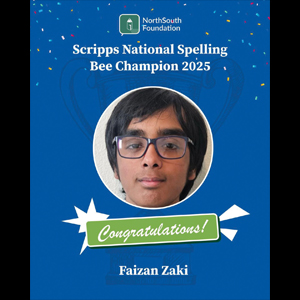
Faizan Zaki, aged 13, became the 2025 Scripps National Spelling Bee champ after correctly spelling “éclaircissement” in the 21st round of the contest. Now a rising 8th grader from Allen, Texas, Faizan was the runner-up last year. His parents are Indian immigrants from Hyderabad. The prize includes a $50,000 cash award and the trophy, $400 from Britannica, and $2,500 in cash and reference works from Mirriam-Webster.
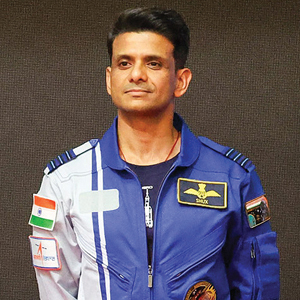
Shubhanshu Shukla, a group captain with the Indian Air Force (IAF), became only the second Indian citizen (after Rakesh Sharma) to go to outer space. Shukla traveled to the International Space Station (ISS) as part of Axiom Mission 4, a four-crew private spaceflight operated in partnership with NASA and SpaceX. Shukla’s experiments included tracking the impact of microgravity on germination and plant development.

Prajakta Koli, an actress and a YouTuber with 7+ million subscribers (and 8+ million followers on Instagram), is the only Indian-born influencer included in the digital voices category of the inaugural TIME100 Creators List. Known as MostlySane, she focuses on comedy, gender equality, and climate change. Also on the list are entrepreneur Dhar Mann, YouTubers Michelle Khare and Samir Chaudry, and podcaster Jay Shetty.
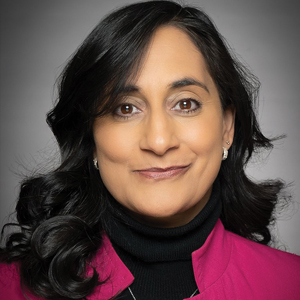
Anita Anand is minister of foreign affairs in Canada, where Mark Carney is the prime minister. The first Hindu woman to be elected to the Canadian parliament, Anand is also has the first Hindu cabinet member in her nation. Also serving in Carney’s cabinet are South Asians Shafqat Ali (president of the treasury board), Gary Anandasangaree (minister of public safety), and Maninder Sidhu (minister of international trade).
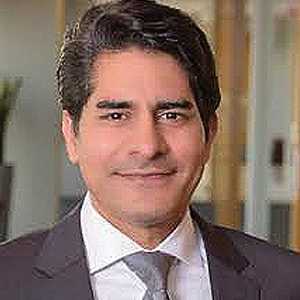
Bobby Mukkamala has become the first physician of Indian heritage to head the American Medical Association (AMA). A board-certified head and neck surgeon, Dr. Mukkamala is a graduate of the University of Michigan Medical School. He has his own practice in Flint, MI, where he is involved in public health and early education initiatives. AMA, the largest medical association in the U.S., has over 250,000 dues-paying members.
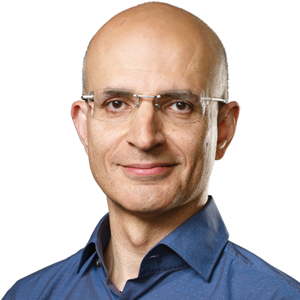
Sabih Khan, Apple’s new chief operating officer, is the company’s highest-ranking Indian American. Employed at Apple for three decades, the Moradabad-born Khan has served as VP of operations since 2019, overseeing his company’s global supply chain. He also oversaw product control and fulfilment, planning and procurement, manufacturing, and logistics. He studied engineering at Rensselaer Polytechnic Institute in Troy, NY.
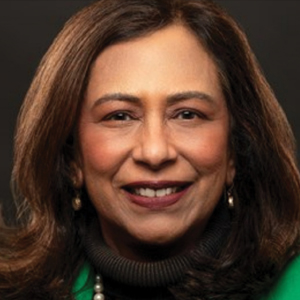
Darshana T. Shah received the 2025 Carole J. Bland Phronesis Award from the Association of Medical Colleges (AAMC). It recognizes the spirit of “phronesis” (acting for the welfare of others without thinking about oneself). A professor of pathology at the Marshall University Joan C. Edwards School of Medicine, West Virginia, she’s an associate dean for faculty advancement. She’s a founder of the university’s medical journal.
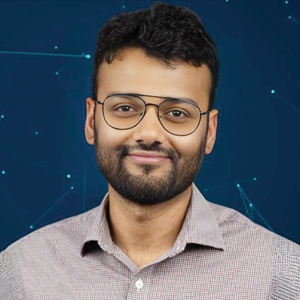
Eshan Chattopadhyay, an associate professor of computer science at Cornell, is a co-winner of the 2025 Godel Prize. He and David Zuckerman, a computer scientist at UT Austin, received the European award for a research paper that shows how to build a more secure computer system by turning two low-quality random sources into a highquality one. Chattopadhyay focuses on circuit complexity and pseudo-randomness.
& & & & & & & & & &
BOOK MATTERS
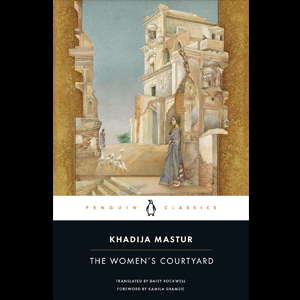
The Women’s Courtyard (Penguin Classics), by Khadija Mastur. This novel, titled Aangan in Urdu, is a new English translation by Daisy Rockwell, who also translated Geetanjali Shree’s Booker Prize-winning Tomb of Sand. Shree writes in Hindi, as did the novelist Bhisham Sahni, whose classic Tamas has been freshly translated as well by Rockwell for Penguin Classics. Both novels have Partition themes. Sahni had migrated to India from Rawalpindi, while Mastur had moved in the other direction, relocating from Bareilly in India to Lahore in Pakistan. Mastur’s novel revolves around the constricted lives of women, focusing on a Muslim girl named Aliya and her family during a turbulent time. Conditions worsen as Partition looms, but rather than worry about distant politics, over which they have no control, the women stick to domestic matters. Practical and sensible, they worry about their families and place in society, which is undergoing rapid change. Kamila Shamsie wrote the foreword.
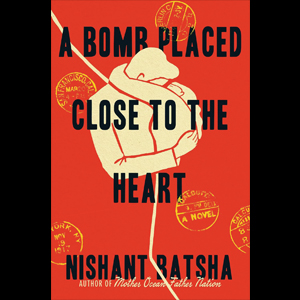
A Bomb Placed Close to the Heart (Ecco), by Nishant Batsha. The son of Indian immigrants, Batsha is the author of a novel titled Mother Ocean Father Nation. His second novel is set in the early decades of the 20th century. In 1917, as World War I rages, Indra Mukherjee meets Cora Trent at a party near Stanford. They’re from different worlds, but they form an immediate bond. Mukherjee is a revolutionary from India, whereas aspiring writer Cora is from a mining town in the American West. They’re activists and anti-colonialists, and Indra is also a German spy. Batsha’s novel, which draws on archival research, was inspired by a couple named M.N. Roy and Evelyn Trent. Like them, Indra and Cora get married. Fleeing to evade arrest, they contend with clashing priorities. According to The Minnesota Star Tribune, “its depiction of racism, government overreach and feverish patriotism feels painfully relevant in 2025.”
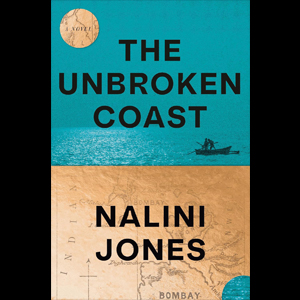
The Unbroken Coast (Knopf), by Nalini Jones. The author of What You Call Winter, a story collection, is back with a novel after many years. Featuring Francis Almeida, a retired history professor in India, and Cora D’Mello, a girl from a Koli fishing village, the novel is mostly set in the late ’70s and late ’80s. The story, shaped by their evolving relationship, takes the reader back to their first encounter when she’s eight years old. Almeida bumps into her on his bicycle, breaking her arm. The reader also gets glimpses of mid-17th-century Bombay, where a sunken statue of Stella Maris, the Virgin Mary as celestial queen, is found near the coast. It’s a reminder of Portuguese colonialism in India. Almeida’s children and grandchildren live far away, but he bonds with Cora, who goes through her own challenges as she grows up and gets married. Hirsh Sawhney calls it “a beguiling epic about a Catholic community in Mumbai grappling with the treacheries of progress and the inexorable march of time.”
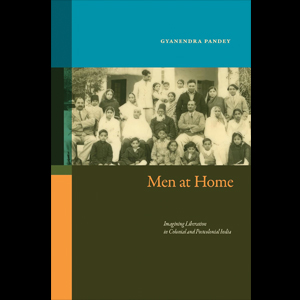
Men at Home: Imagining Liberation in Colonial and Postcolonial India (Duke University Press), by Gyanendra Pandey. In this book, a distinguished professor of history at Emory examines the lives of Indian men in the domestic sphere, where they’re curiously both present and absent. “This is a ‘personal’ book in terms of the questions it asks about family, community, culture, and history in contemporary South Asia,” Pandey notes. Although none of this was unfamiliar, it took a decade of research to turn it into a book. Drawing on autobiographies, memoirs, fiction, and ethnographies, he probes how men dealt with marriage, intimacy, and domesticity. Among issues considered are honor and shame, rights and responsibilities, citizenship and belonging. Featuring Ambedkar, Premchand, Gandhi, etc., the book is also a look at Indian society as it was transformed by nationalism and modernity.
Enjoyed reading Khabar magazine? Subscribe to Khabar and get a full digital copy of this Indian-American community magazine.