

Cinema: Anurag Kashyap on Canceling Cancel Culture

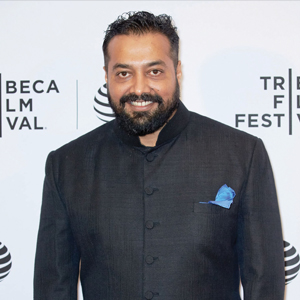
In Bandar (Monkey in a Cage), the director Anurag Kashyap dives headfirst into the messy intersections of love, power, and accountability in digital-age India. Khabar caught up with him in September at the 50th Toronto International Film Festival.
Featuring Bobby Deol in a career-defining role, alongside Sanya Malhotra, Saba Azad, and Sapna Pabbi, Bandar is a taut prison drama confronting the thornier ripple effects of #MeToo. “I didn’t want to make a #MeToo or #MenToo film. Bandar is about a man-child’s coming of age,” says Kashyap. Samar, played by Bobby Deol, is an aging television star whose life unravels when his ex accuses him of rape. Co-written with Sudip Sharma—best known as the creator, writer, and executive producer of the acclaimed series Paatal Lok and Kohrra—the story resists black-and-white answers. Instead of taking sides, it probes the larger question of accountability in an era where cancel culture looms large, he says. In our interview, Kashyap, who is not afraid to ruffle feathers, talks about cancel culture, and why Bandar is designed to spark conversations, not end them.
 What drew you to make a story like this, and what is the central idea behind it?
It came from a single idea. Since the advent of social media, we thought everyone suddenly had a voice. But the powers that be are smarter than us, and what happened is that cancel culture suddenly came in. People get cancelled just like that.
I’m very anti-cancel culture. You don’t cancel a person in a second—you give them a chance to redeem themselves, to correct themselves. We are all human beings. We all make mistakes. Sometimes we take the wrong cues—I’ve experienced this myself. For example, sitting and having a conversation with a woman, I might misread the situation and feel she’s experiencing the same thing I am. Then comes the realization that I was wrong. But I was given a chance to redeem myself . . . to apologize, to admit that I mistook the moment. In today’s world, however, things have changed. Our generation was taught it’s impolite to say no, but today’s generation draws boundaries immediately. We had to learn that much later in life.
How did Bobby Deol come into the picture for this role? It seems like a very unlikely collaboration given his background in the commercial space—and you are, of course, known for your gritty realism.
Honestly, I didn’t think Bobby would take it on. It was my producer Nikhil (Dwivedi) who said Bobby is ready to experiment, that he’s open to roles people don’t expect him in. That stuck with me, so I approached him. Full credit to Nikhil for planting that seed. Bobby was the perfect fit.
 What was it like to collaborate with Bobby on such a complex role? What about him as a performer stood out for you?
He’s incredibly sensitive, empathetic, and trusting. At first, he was nervous about my process—I work differently than many directors. But that lasted maybe six to eight hours. After two scenes, he started trusting me fully. We shot the entire film in 25 days. Once he committed, he gave me his complete faith. That made me feel responsible for bringing out his best. He really surrendered to the character.
I remember once we ended up at the same gym. I saw how determined he was; he simply wasn’t giving up. He reinvented himself, started learning the craft of acting all over again, and kept experimenting. That’s rare in this industry. Most people get caught up in their own aura, their image, or their comfort zone. But he wanted to break out of that and do different things, and that’s what sets him apart.
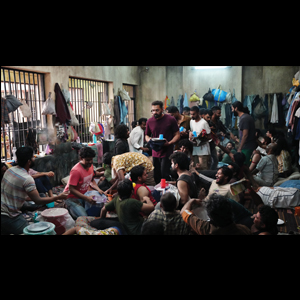
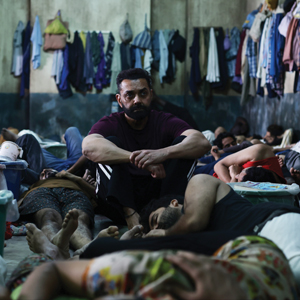
[Left] Stills from Bandar
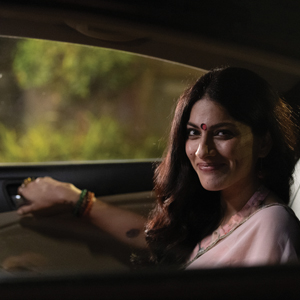 Bandar asks uncomfortable questions about power, gender, and accountability. What do you want the audience to take away from it?
More than answers, I want conversations. I don’t want to say who’s right or wrong. Life is messier than that. Sometimes the consequences are terribly disproportionate to the mistake because the system is such that it just wants to out outfire. It doesn’t give a person time to realize what he or she has done.
The idea of Bandar is that it’s a conversation starter. We need to talk. We need to stop cancelling people and start having conversations. I’m very anxious to see people’s reactions, because I know there will be lots of questions—why did you make this film, what’s the point, who’s right, who’s wrong? I don’t want to say who’s right or wrong. That’s why we showed all those different perspectives. Sab sahi hai, sab galat hai. (Everything is right, everything is wrong). In my head, I see this film as the coming of age of a man-child. And I’m still figuring out if I’ve come of age myself.
Bandar is slated for theatrical release in 2026. Baisakhi Roy is a culture writer and journalist based in Ontario, Canada. She hosts the Screen Time column in Khabar.
Enjoyed reading Khabar magazine? Subscribe to Khabar and get a full digital copy of this Indian-American community magazine.