

IndiaScope: Growing Pains for Indian Foreign Policy

Over the decades, India’s roots in nonalignment seamlessly morphed into its current strategic autonomy doctrine, while staying true as much as possible to ideals of noninterference, neutrality, support for the Global South, and adherence to global norms. Fast-changing events have upended the world, and now comes a reckoning for India.
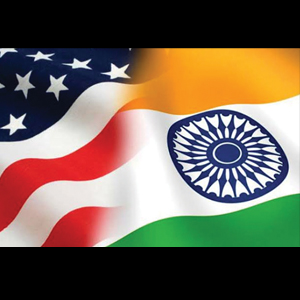
India’s closeness to the U.S has grown exponentially in the years since the George W. Bush administration’s civilnuclear accords. Every administration since that time has recognized India’s importance to American policy in Asia, to the extent that the term Indo-Pacific has become widely used. Over those decades, India still maintained close defense and diplomatic ties with Russia, its Cold War ally. Most recently, despite pressure from the Biden administration to choose sides in the Russia-Ukraine war, India steadfastly refused, and the U.S. accepted its posture. It seemed as though the U.S. was finally approaching India in the way that it had sought for so long: as an equal partner, as the world’s largest democracy, as a global force for good, as an important ally.
For decades, India’s foreign policy bureaucracy was wedded to an unfavorable image of America, much of it fueled by tense relations between leaders like Indira Gandhi and Richard Nixon—whose disdain for each other was well known—and by India’s quasi-socialist and anti-imperialist worldview. And then came this new embrace of America. It mirrored what was going on in India itself: profound economic, political and generational change that had Indians opening themselves to America like never before.
Added to this was the Trump-Modi bromance, which injected an added feel-good element to the relationship. India started to feel special, to relax and enjoy its special status with America. But now, quickmoving world events have rocked it on its heels. The first was a tense clash between India and Pakistan, followed by a quick de-escalation, with Donald Trump curiously taking major credit for the ceasefire. Although the world is used to his self-serving declarations on social media, his claim made Indians feel offended and small. When his administration used flimsy reasons to detain or deport foreign students, including Indians (who form the largest group of foreign students in the U.S.), India did not feel special in the least.
Then came Trump’s lunch with Pakistan army chief Asif Munir, the same chief who had been at war with India a few short months ago. The U.S., perhaps propelled by potential business and crypto interests in Pakistan, had curiously moved seemingly much closer to the country in a very short period of time. No doubt some of this new closeness after years of a growing U.S.- Pakistan gulf was in part fueled by Iran-Israel tensions, America’s preparation for the potential bombing of Iran’s nuclear sites (which did occur), and its need for Pakistan to stay uninvolved. This latest U.S. move has made India feel bemused and betrayed.
And so we have India in 2025: poised to move closer to the U.S. than ever before, but now seeing a cautionary light in its path; still cordial with its constant ally Russia, but facing the new reality that even as it grew more attached to America, Russia had moved closer to and more dependent on China.
In the past, India’s nonalignment had been a matter of policy and posture, but in reality there was always the knowledge that a powerful superpower, Russia, had its back and would provide the deterrence, heft, and weaponry needed in dealing with aggressive neighbors. With today’s strategic autonomy, India seems more adrift. Of course, as a well-armed nuclear state, the need for a dedicated ally is not critical. America, which India had begun to see as its special partner, is now exposed as a more fair-weather friend. If they could pivot so easily to embrace India’s arch enemy, so soon after the Indo-Pak clash, how far could they be depended on? For America, India is no Israel. And yet, there is no doubt that India’s focus on building the Indo-U.S. relationship has steered it further away from Russia, which is mired in its own machinations, conflicts, and bilateral relationships. For Indian foreign policy, it’s a moment of truth.
Tinaz Pavri is Professor of Political Science and Director of the Asian Studies Program at Spelman College, Atlanta. A recipient of the Donald Wells Award from the Georgia Political Science Association, she’s the author of the memoir Bombay in the Age of Disco: City, Community, Life.
Enjoyed reading Khabar magazine? Subscribe to Khabar and get a full digital copy of this Indian-American community magazine.