

People: Twice the Fight


Why do women of color still struggle for equal footing in America’s halls of power? Beyond the visible hurdles of racism and misogyny, many face unseen barriers from within their own communities. In her documentary, Bad Ass Women Doing Kick Ass Shit, former Washington State Senator Mona Das exposes this layered struggle and reveals what it truly takes for a woman of color to run for a political office—and win.
One quiet evening in 2014, when Mona Das was walking her dog through her suburban neighborhood of Seattle, she came across a signboard that would change the course of her career— “Pramila Jayapal for Senate.” Das, a first-generation immigrant and an entrepreneur, was running a mortgage firm at the time.
The placard that changed her roadmap
Sharing the anecdote, Das says, “In that moment, that small placard told me four things — one, that the contestant is Indian; two, she’s a woman; three, she’s running for senate; and lastly, if she can do it, I can do it too!”
Das remembers this moment as being pivotal in bolstering the dream she had been nursing for many years—of running for political office in America. Growing up as a first-generation immigrant in small-town America, without any visible leaders of color, she rarely found validation for her ambition.
But all this was set to change when Das took up the challenge of running for Washington State Senate from the 47th district. Das says, “I knew it was tough, but I personally knocked on 8000 doors and my team covered over 30,000 homes. In the end, our determination paid off and we were able to flip the seat and create history.”
Das made the most of her years in the Senate, but early on in her journey, she realized that the road was steeper for women and people of color. She says, “During my initial few days in the office, I was told by four white male colleagues to stay quiet during the first year.”
Making a difference
The experience set the tone for her tenure, and the rebel in her knew that her activism had to extend beyond her duties as a Senator and outside the boundaries of Washington state. She says, “I passed over two dozen laws in just four years—a feat rarely heard of in state politics.”
One of her most significant legislative achievements, Senate Bill 5022, made Washington one of the first states to ban certain single-use plastics, sending a strong message in the fight against pollution. “I knew I was making a difference, but most of it was restricted to my state. My policies were bringing in changes. Other states went on to introduce similar bills as a ripple effect, but I knew my experiences and achievements would mean nothing if I did not inspire the next hundred women like me who were unsure if they had a path towards their dream.”
With a mission to create a national and global impact, Das re-emerged with new titles: speaker, strategist, filmmaker, and founder. She began advising political candidates and no profits on fundraising and leadership strategy. She started helping others— particularly women of color—navigate the same uphill battles she had once faced.
From senator to storyteller
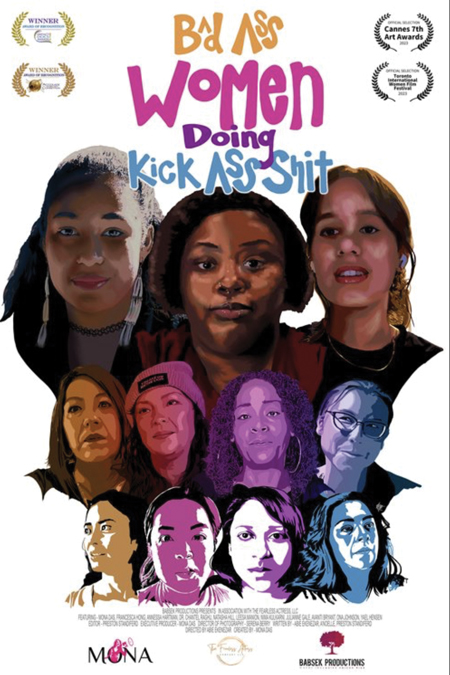
But it was through the art of storytelling that Das found her most powerful voice. As executive producer of Bad Ass Women Doing Kick Ass Shit—a documentary chronicling the journeys of eight BIPOC women running for office—she dared to ask a question few had fully articulated: What unique challenges do women of color face when they step into power?
The film wasn’t just a celebration; it was a revelation. From fundraising biases to media stereotyping to institutional gatekeeping, the documentary exposed the layered hurdles women of color endure while seeking leadership roles in politics and beyond. It struck a chord.
The film earned two Telly Awards and was honored at several global competitions. But more importantly, it sparked conversations in rooms that too often ignore voices like Mona’s and the women she featured.
Through a series of candid and deeply personal conversations, this film illuminates the everyday challenges these women experienced throughout their individual campaigns. Das says, “Even though we came from different states and had different backgrounds, our struggles were the same. We had similar immigrant stories.”
 The steep climb
Das says that while researching for her documentary, she realized why the road seems steeper for women of color in America. She says, “For many women of color like me, as they embark on their dream, their close friends or families disappear. But [that’s also when] strangers come along.”
Das believes that this attitude from within our close circles comes from a deeply ingrained lack of confidence as immigrants, where a lofty goal is often dismissed as whimsical. She adds, “People disappear because they do not think that what you are aiming for is possible, and this is where I advise the young women to look out and ask for help. One of the things about America is also that when you ask, people volunteer to help.”
Das maintains that the challenges get bigger as you forge ahead. “And this is why I chose to branch out and create a system where we do not just give an arm to help another woman, but send an elevator to get as many women as we can!”
Her years in Congress also showed Das that even the Democratic caucus can be a deeply racist, misogynistic, and discriminatory place. She adds, “I encountered everything from silencing to othering to being pushed down. And therefore, my documentary is just the first step towards creating a more favorable equilibrium not just in political office in America but in every field.”
Das continues to counsel and connect women of color who have political ambitions. She says, “I have helped eight women of color into the legislature. In a few short years, there has been a visible change. When I was a senator in 2019, there were hardly any people of color. Cut to today, and we have more women and more people of color in the Washington state Senate than you would have imagined a few years ago.”
Where the dollars don’t go
Das also helps candidates learn another fundamental skill necessary for carving a space in the political ecosystem: fundraising. It remains a significant hurdle, particularly for women of color. Studies have consistently shown that these candidates face systemic barriers when trying to raise campaign funds. According to a 2021 report by the Reflective Democracy Campaign, women of color receive less financial support from political donors compared to white male candidates, even when they are just as qualified. This funding gap limits their visibility, reach, and competitiveness in elections.
Das says, “As a person of color, asking for money remains an uncomfortable topic. Let’s get this straight – Indians do not like to ask for money or be asked for money. The story is similar in black culture, where people have a reluctance and believe one should not be asking for handouts and try to work whatever they can on their own. Often, when you come from comparatively marginalized communities, you may encounter problems where your community may not have people with that much money to dispose of.”
“Another peculiar problem in Indian communities is that if people are wealthy, a majority of their donations would go to temples,” says Das. She recalls trying to help two women candidates fundraise for the school board. “We all know how particular Indians are about education and school, and yet, the majority of our fundraising got us $101 from Indian communities. This is where I step in and try to educate the importance of raising money for decisions that would eventually affect their forthcoming generation directly.”
Das says, “Most Indians have not had too positive experiences from political systems back home, and the general belief within the community is that politicians are corrupt, and so we would have little to do with politics.” It is not limited to Indians, though. The problem remains across the board for minority communities.
The road ahead
As a globally conscious changemaker, entrepreneur, and award-winning filmmaker, she is getting to do what she loves to do the most. She says, “I always knew I wasn’t just meant to make a difference in my neighborhood or state,” she says. “I wanted to shift narratives, systems, and entire cultures.”
Today, she wants to help the next generation of women of color to dream about being what exactly politics in America needs—a disruptor with a plan! “I didn’t get here by accident,” she says. “And I won’t stop until the systems that have tried to hold back people like me are replaced by ones that lift us all.”
Zofeen Maqsood is a U.S.-based journalist who writes extensively on millennial trends and expat issues. She has contributed to some of the biggest publications and websites in India and in the U.S.
Enjoyed reading Khabar magazine? Subscribe to Khabar and get a full digital copy of this Indian-American community magazine.