

Spotlight: Rooted in Values, Ready to Lead

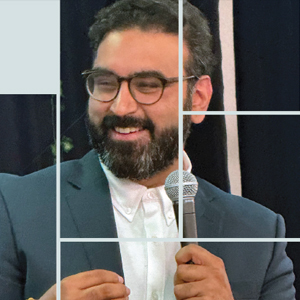
Praised by John Lewis as “Good Trouble,” ROHIT MALHOTRA is running for Atlanta City Council President. In this interview, he discusses his economic vision, protecting Atlanta from ICE raids, and advancing diversity, equity, and inclusion.
Speaking about his run for the position of Atlanta City Council President, Rohit Malhotra says, “I’m not just running because I need to be in politics. It’s because I need to be in public service at a time like now. I believe that our win in this election will fundamentally change Atlanta and municipal politics in this country for a long time. And I don’t take that responsibility lightly. It weighs heavily on me. It’s the thing I think about the most when I’m by myself, but it’s a responsibility I’m willing to take on, and I think it’s worth it.”
Malhotra represents a rising generation of civic leaders in Atlanta—rooted in cultural values, committed to community service, and focused on creating inclusive, people-centered policies. His career has been defined by serving communities that have been historically left out of decision-making processes.
Raised in Atlanta to Indian immigrant parents, Malhotra grew up influenced by both Indian and Southern culture. While remaining deeply connected to his heritage, he has also been steeped in Atlanta’s civic identity.
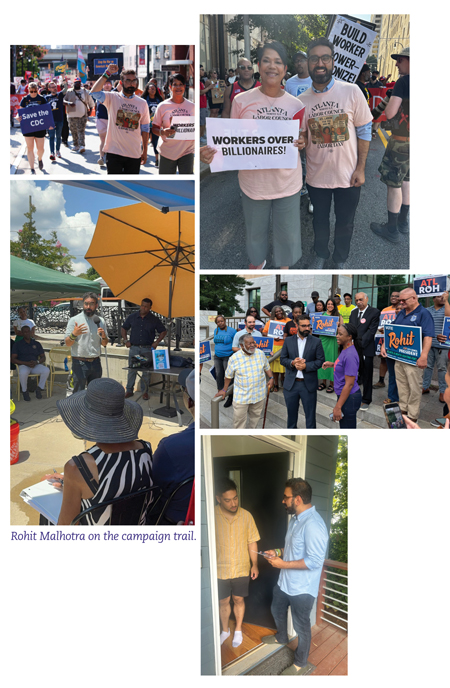
 Professionally, Malhotra is the founder and executive director of the Center for Civic Innovation (CCI), an Atlanta-based nonprofit that works to empower residents to influence the policies that shape their lives. His career also includes service as an Ash Innovations Fellow in the Obama White House, where he focused on using innovation to improve public services. He is an alumnus of Emory University and holds a master’s degree in public policy from Harvard Kennedy School.
Widely recognized for his leadership, he has been named to Atlanta Magazine’s list of the 500 Most Powerful Leaders, honored among the Atlanta Business Chronicle’s 2025 list of “40 Under 40”, and is a graduate of the Leadership Atlanta program.
SaportaReport described Malhotra as a “policy nerd” who focuses on restoring trust in government through transparency and neighborhood-driven policy. Meanwhile, Atlanta Community Press Collective noted that his candidacy “reflects a broader call for accountability and responsiveness at City Hall,” positioning him as a candidate eager to shift the balance of power back toward residents.
The following are excerpts from our virtual interview with Malhotra.
How have Indian values shaped you, and how do you carry them in your work?
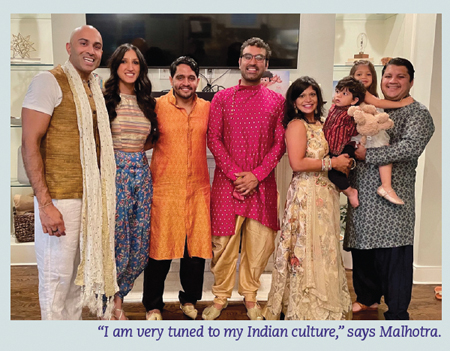
I think Indian values are, in many ways, not just Indian. They are human values—such as respecting elders and building personal relationships. I have learned from my Indian culture that shared community and shared food build relationships. I love being Indian. I grew up in the Vedic Temple in Atlanta. I was captain of the bhangra team and used to teach it at the Global Mall. I’m very attuned with my culture.
While I am a nerdy Indian kid who loves to read about policy and work with community organizations to design what communities can look like and how we respond to things, I am unwavering when it comes to crisis leadership. I’m centered in my morality, and it is not for sale—for political expediency or convenience. There is nothing you can offer me that would make me think about negotiating the values that I’ve been raised on and that I hold sacred.
In running for the position of Atlanta City Council President, what is your vision for the city going forward?
I’m running for office to build a bold economic agenda that benefits families, small businesses, and neighborhoods in Atlanta. My vision is that Atlanta should be a place where people feel they belong, and that the people who are here today can see themselves reflected in this city tomorrow. I want to ensure that we’re a city that thrives and takes care of everyone in it.
 You say that the answer to bad national politics is good local policy. Please elaborate.
We are in a political crisis. This federal government is trying to find ways to legalize hate. And even if you don’t believe in the ability of the government to do good in your life, I hope people understand that the government can do a lot of harm. You have a federal government that is attacking the very possibility for so many families to have access to basic needs. When they erode the federal government, we need to protect our cities because, for some people, [things like ICE raids] may be just an inconvenience, but what we forget is that for a lot of people, this is life and death. I think city leadership must be there to protect residents on a day-to-day basis from the harm that might be coming down from the federal and state levels.
Migrant communities in Atlanta and elsewhere are worried about ICE raids and detention centers. How do you think we can provide safety and security in this environment?
Safety and security are the primary responsibilities of cities for their residents, regardless of their background. First and foremost, the city must be a shield for its people. We cannot allow the federal government or the state government to overstep its authority. In the name of safety, we’ve legalized hate. I think the city of Atlanta should not cooperate with ICE. We should not have a contract with ICE. Cities deserve leaders who are going to stand in the gap, who are going to use the full force of the law to fight tooth and nail to make sure that no one can come in and start kidnapping people, regardless of their immigration status. I don’t think we realize how predatory this is.
John Lewis called you a good troublemaker. What has support from the Black community meant for you? And how does that go into your representation of the entire city?
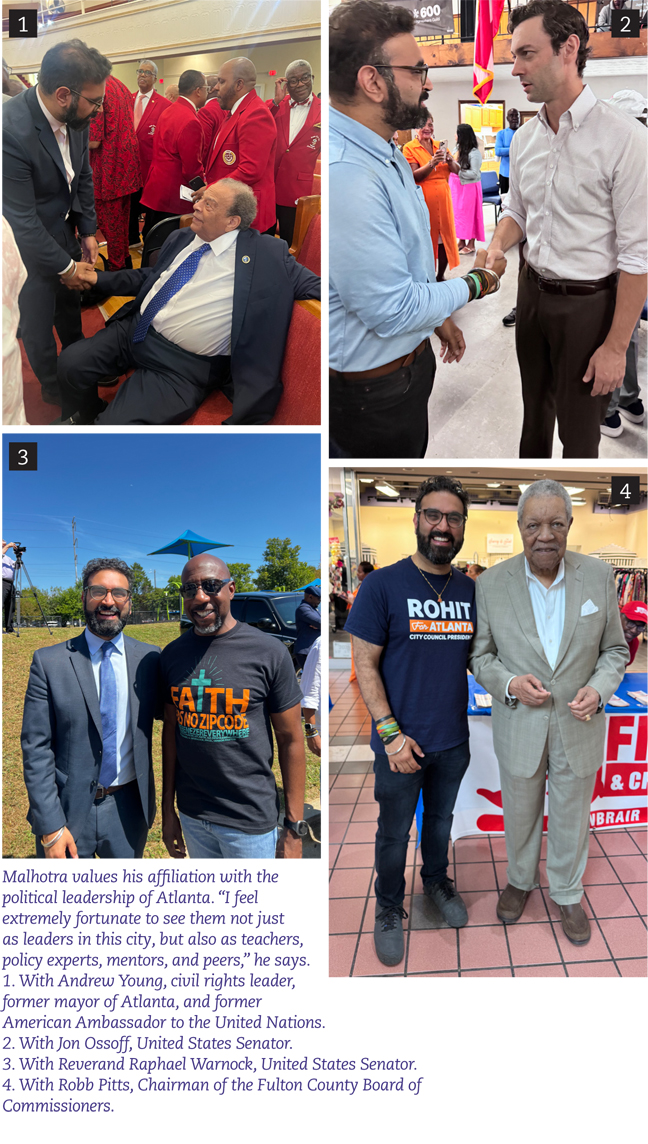
The best parts of Indian culture are very congruent with the best parts of Black culture. It is not by accident that many of my mentors are Black leaders who have dedicated their lives to public service. I have had the great fortune of being in Atlanta, where I have had the opportunity to learn from many Black leaders. In Atlanta, if you are engaged in public service work and are not in a relationship with Black leaders in the city, it raises the question of whether you have a comprehensive understanding of what public service is supposed to look like in Atlanta. I feel extremely fortunate to see them not just as civil rights icons or Black leaders in this city, but also as teachers, policy experts, mentors, and peers.
I was joking with someone that all my favorite rappers in Atlanta are now making flute music and meditation tapes, and all my favorite Indian artists are making hip-hop. It’s beautiful, something we should truly embrace. I don’t want anyone to read this and think that being pro-Black is stacked against being Indian. I believe being pro-Black is one of the most Indian things you can do, which is to ensure that the people who fought for you to be able to do the things we are doing in this country are recognized.
 We see that DEI initiatives are under attack. What are your thoughts on protecting the vulnerable?
DEI was intended to highlight the disparity and the incongruence of how we treat people in this country and who has the opportunity for what. It was intended to address the much larger issue of the imbalance and the obstruction of opportunities for people based on their identity and where they grew up.
Black and brown people didn’t ask for DEI. We didn’t ask for a separate investment pool for Black people; we want you to invest in Black people every day. DEI needs to be reflected in our policies, processes, and procedures—in how we pay people, treat them, and care for them.
What inspires you to be in public service?
To say I do public service sometimes feels almost fraudulent because I’m just behaving the way I was raised to behave. Government and society have almost forced us to do the most unnatural thing as human beings, which is to be selfish. We pretend as if that is our natural inclination. It is not. We are not intended to be isolated, selfish people. We are meant to do exactly what our culture teaches us, which is to be together, even if uncomfortably. I think that’s what makes me so good at this job, as I’m not unclear about who I am. It allows me to be very honest and authentic in the spaces that I occupy.
One of the emails we received referred to you as “Rohran.” It was an interesting reference to Zohran Mamdani. Of course, the political environment is very different in New York versus here, but are there any similarities between your approach and his?
Public service is a sacrifice in the truest of ways for an Indian Muslim born in Africa, living in New York. To put his life on display, to try to build something better for the people around him, and to do it in a way that is unwavering in his morals and unapologetic in his courage, I think, is really powerful. And it goes back to the question around trust, where even if you disagree with him or the campaign on some key fundamental issues, he exudes trust that he’s going to try his best.
Mamdani is a millennial, which is an interesting leadership class because we grew up with our parents trusting institutions. Religious, financial, or governmental, we trusted these institutions blindly. But then we witnessed those institutions collapse and fail our parents (as in 2008), and we have seen the impact of their failure on our families. It damaged not just their financial well-being, but also their emotional and mental well-being.
In Mamdani, you see the rise of a leadership class that wants to have an honest conversation about what happened to our families and seeks corrective measures that are more responsive to what we wish our families had in a time when they needed it most.
But I’m also clear that running for office in New York is not the same as doing that in Atlanta. If we get it right in Atlanta, it will have a greater ripple effect across the country than almost anywhere else. As goes Atlanta, so goes the South. As goes the South, so goes the country.
 Do you have a message for the Indian community?
I believe we are in a moment of crisis in this country. If you are silent right now, you’ll be remembered for being silent. If you are courageous right now, your courage could change the course of history.
It’s our responsibility to show the next generation what hopeful politics looks like. I think we forget that folks in their 20s have only experienced the era of national politics, beginning with Trump’s first term. This era has been defined mostly by hate and vitriol in politics.
It is a good time for Indian Americans to acknowledge the role we have to play in shaping the future of politics, to recognize that we cannot remain silent, that we must be vocal, and that we must utilize the privileges we have. Put your money in politics. That too is an investment.
Often, many Indians view politics as transactional—what it means for their taxes or what it means for their homes. However, multiple generations of Indians have now grown up here, and they feel a sense of identity here. We need to ask ourselves not just what it means for me, but what it means for the community that I’m in, and what my sense of responsibility to that community is.
Pooja Garg, an award-winning journalist and USC Annenberg Fellow for Writing and Community Storytelling, is Deputy Editor for Khabar magazine.
Enjoyed reading Khabar magazine? Subscribe to Khabar and get a full digital copy of this Indian-American community magazine.