


Wellness: Home Cooking, Feminism, and Self-Care

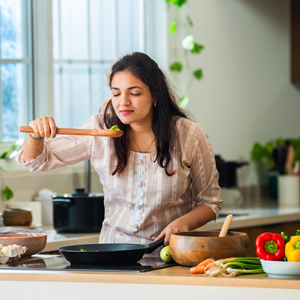
Cooking is for everyone! Learn to love it for its inherent benefits and joys, not because traditional cultures impose it upon you or keep you away from it.
A friend was appalled that I cook every day. I explained to her that in Ayurveda, fresh food is considered medicine. She confessed that for the first decade of her marriage, she refused to cook. It was only after her kids were born that she realized eating out wasn’t sustainable or healthy, so she started cooking a few times a week.
When I was growing up, girls were told by parents, neighbors, aunts, and anyone who could squeeze in an opinion that they must learn to cook. This notion was so deeply ingrained that even if you could reach Mars as a female astronaut but couldn’t cook dal-chawal-aloo-gobhi, you were considered a failure as a woman. Because “sasural mein kya hoga?” (What’ll happen once you are married and at your in-laws?)
One of my childhood friends was married at 21. Coming from a very wealthy business family, she has only known opulence and is always surrounded by a flood of helpers at home. And yet, despite the multiple chefs at home, her parents expected her to cook— just as a prep for her future in-laws. She believed she didn’t have an option. In our time, a girl was forced to learn how to feed her husband and the extended in-law family.
So, the first chance they had, several women who grew up in the ’70s and ’80s revolted against cooking.
They argued: why does it have to be a woman’s job to cook for her family? This notion was anti-feminist to them.
But that relationship to cooking can change on a dime, once one learns to think of it as an expression of self-care and self-love. Cooking at home isn’t just about conforming to gender roles—it's about fostering wellbeing and making healthier, more conscious choices. And that goes for women as well as men. Everyone, regardless of gender or profession, should know how to cook as it’s an important life skill.
Here are some of the many benefits of cooking at home:
The deepest form of self-care
The process of selecting fresh ingredients, engaging your senses, and creating something delicious and healthy can be incredibly therapeutic. According to Harvard Health Publishing, “A growing body of scientific evidence supports teaching patients how to cook meals at home as an effective medical intervention for improving diet quality, weight loss, and diabetes prevention.”
Eating out is an enjoyable way to connect socially, try new foods, and take a break from cooking. But restaurant food always has extra sodium, sugar, and fat, and is not always portion-friendly or nutrient-dense. Ultimately, you open doors to lifestyle-induced diseases if you dine out too regularly. Cooking for yourself and your family can be the deepest form of self-care.
Your kitchen is your first pharmacy
Recently, I came down with a fever, body aches, congestion, and an incessant cough. After determining it wasn't the flu or COVID, I relied on rest, simple meals that nourished my agni, and a well-stocked spice cabinet to heal myself from the core. Being an Ayurvedic doctor and daughter of a woman who taught me to think of my kitchen cabinet as my apothecary, this comes naturally to me.
For me, cooking is a poetic representation of health advocacy. A friend had undergone dental surgery, so I prepared an Ayurvedic khichdi for him with seasonal spices, which aided his recovery, built his immunity, and strengthened his digestive fire. Sharing meals with family or friends fosters deeper connections
and bonding.
A form of meditation
Cooking is also a form of meditation. At the end of a chaotic day, nothing grounds me more than my kitchen. I love the aroma that fills the air when I sauté freshly chopped garlic. The rhythmic, repetitive nature of chopping, stirring, and seasoning can be meditative. Simple dishes and cooking rituals create a sense of peace. Working with my hands and engaging my senses helps me turn inward while keeping the stressors outside the kitchen.
Easy on health and budget
Home cooking empowers your budget. It’s not uncommon these days to spend upwards of $12 for just a cup of coffee and a bagel with cream cheese—a breakfast that is likely to make you drowsy by 10:30 am from carb overload. Instead, why not prepare a healthy breakfast at home of oats and fruits? Both your wallet and arteries will thank you. Cooking at home saves money and reduces stress. Financial stability, built over time with these little efforts, contributes to your overall peace of mind.
An outlet for grief
Cooking can also be an outlet for grief. My mother was an incredible and advanced cook. In the ’80s, she had a pasta maker at home. On some days, cooking for me is a way to honor her memory and keep her essence alive. The aroma of cilantro and fresh ginger at our local Indian grocery store is invigorating for me just as it was for my mom. If you are missing a loved one, you can make their favorite dish and share a story about them with your family.
A nourishing family affair
Make cooking a fun activity with the kids! Cooking at home is not just about preparing meals—it’s a mindful practice that nourishes the mind, body, and soul. Cooking with family can be a way to bond and release stress. It’s a wonderful way to introduce your kids to an important life skill and a nourishing activity. It’s a great way to pass down cultural and traditional recipes to kids. When I was a little girl, we always ate dinner as a family at the dining table. My brother laid the table and I played with dough, creating world maps with my rotis. My dad was insistent that Mom shouldn’t serve us hot rotis or dosas. Once the meal was ready, we all ate at the same time, shared updates about our day, and caught up with the family.
Cooking as a creative activity
Cooking encourages creativity and mindfulness. Just like my mom, for the most part, I don’t follow recipes. Experimenting with dishes allows for self-expression and creativity. Spices transport me to a hearty and healing place. I was at a meditation retreat where they offered the most incredible, vegan lunch. While others were raving about the food, I took a picture of my lunch bowl and found a quiet corner. I closed my eyes, experienced every spice and flavor inside my mouth, guessed the ingredients, wrote it down, and made it at home the next day. It turned out delicious.
Cooking needn’t be about lavish, five-course meals or a big production in the kitchen. A healthy and balanced meal uses fresh ingredients, seasonal vegetables, and is made with love and care. No matter who cooks in your family, make it a habit to prep, prepare, and enjoy most of your meals at home. Your financial, physical, and emotional well-being will thank you.
“Everything happens in the kitchen. Life happens in the kitchen.” ~ Andrew Zimmern
Sweta Vikram, an Ayurveda-based life and wellness coach and a graduate of Columbia University, helps people thrive on their own terms.
Enjoyed reading Khabar magazine? Subscribe to Khabar and get a full digital copy of this Indian-American community magazine.