

When Life Changes in a Heartbeat

A physician shares a story that was a wake-up call for her family. Urging readers to be proactive about their cardiac health, she offers tips on how to avoid nasty surprises.
“You don’t look good,” I said to my husband one Sunday morning.
“Yeah, everyone at tennis said that. I think I had too much coffee. I’m really nauseous.”
“But you have coffee every day.” Not alarmed at first, I handed him some medicine.
My husband said he’d taken some earlier and it wasn’t working. Something seemed off, though I couldn’t put my finger on it. After some debate, I dropped him off at the ER—just to be safe—and went home to get ready for our kids’ playdate. Thirty minutes later, the phone rang. It was a cardiologist. I braced myself, fully expecting to be told I had overreacted.
Instead, he told me my husband was having a massive heart attack. Everything became a blur after that. The rush of fear, disbelief. How could this be happening to him? He had just turned 44, exercised almost daily, didn’t smoke, didn’t drink, and had no family history of heart disease. But his main artery, grimly dubbed the “widowmaker,” was 99% blocked. We were lucky. We live near an excellent hospital, and the right doctors were available at the right time.
Even the cardiologist said, “Someone was looking out for you today.”
Luck, though, is not a plan. That day changed everything I thought I knew about health and risk.
In the weeks that followed, I went through every emotion: fear, anger, guilt, relief. I’m a physician, yet I almost missed the signs. Truthfully, most people would have. My husband looked healthy; in fact, he was healthy by all the usual measures. Normal cholesterol. Normal blood pressure. Normal weight. But for South Asians like us, those “normal” numbers can be dangerously misleading. We’ve all heard similar stories: a friend’s brother who collapsed while jogging, a cousin who had a heart attack in his forties, an uncle who “seemed fine” until he wasn’t.
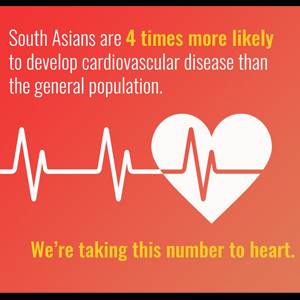
This isn’t random bad luck. It’s a pattern. South Asians are up to four times more likely to develop heart disease than the general population. And it strikes earlier, often a decade before it does in other groups. Even the American Heart Association now lists South Asian ancestry as a risk factor. That means just being who we are puts us in a higher-risk category.
Most of our traditional medical guidelines are based on data from Western populations. But our biology and metabolism are different. Many South Asians (1) Have smaller, denser LDL particles that are more likely to stick to artery walls. (2) Carry insulin resistance years before developing diabetes. (3) Accumulate visceral fat: the kind you can’t see, wrapped around the organs, even at “normal” weights. So you can look fit, eat well, and still have dangerous plaque building silently inside your arteries. Routine check-ups don’t always catch this. Standard cholesterol and glucose tests often look fine. That’s why we need earlier and more precise screening:
• Coronary calcium scoring (CT scan) to detect plaque long before symptoms.
• Advanced cholesterol tests like ApoB or Lp(a), which reveal hidden risk.
• Metabolic and inflammation panels to catch early warning signs.
These tests aren’t exotic; they’re just not part of routine care yet. But they should be.
The good news is that most heart disease is preventable if we find it early and address it aggressively. Here’s what I wish I had known sooner: (1) “Borderline” numbers are not good enough for South Asians. Aim for optimal levels, not average ones. (2) Strength training is as important as cardio. It helps reverse insulin resistance. (3) Diets rich in plants, lentils, fiber, and healthy fats (like olive oil and nuts) can be life-changing, but they don’t have to mean giving up your favorite Indian foods. (4) Sleep, stress, and even social isolation affect heart health more than we realize. It’s not about being perfect. It’s about being informed and taking control.
After my husband’s heart attack, I began reviewing all the medical literature on South Asians and cardiovascular disease. Much of this new data has only emerged in the past three years. My physician colleagues are brilliant, dedicated, and deeply committed. But here’s the reality: the science around South Asian heart disease is evolving faster than the guidelines can keep up. And even when doctors do know about this, they rarely have the time to take further steps.
The traditional medical system isn’t designed for deep prevention; it’s built to treat disease. In a fifteen-minute visit, it’s nearly impossible to explain the nuances of South Asian metabolism or discuss advanced screening options in detail. I started Desidil to fill that gap. I run a consulting practice focused on helping people of South Asian ancestry understand and reduce their cardiometabolic and cardiovascular risk. It’s not medical care, and I don’t prescribe medications or replace your doctor. Instead, I review your labs and imaging, help you interpret what they mean for your background, and outline steps to lower your risk. And because knowledge should be accessible to everyone, I also write a free monthly newsletter that translates the latest research into clear, practical steps you can use right away. No jargon or scare tactics. Just the truth.
Dr. Rachna Relwani, a physician specializing in endocrine and metabolic health, is the founder of DesiDil, a consulting practice that helps people of South Asian ancestry understand and reduce their cardiometabolic and cardiovascular risk. Go to www.desidil.org to learn more and subscribe to her free monthly newsletter.
Enjoyed reading Khabar magazine? Subscribe to Khabar and get a full digital copy of this Indian-American community magazine.